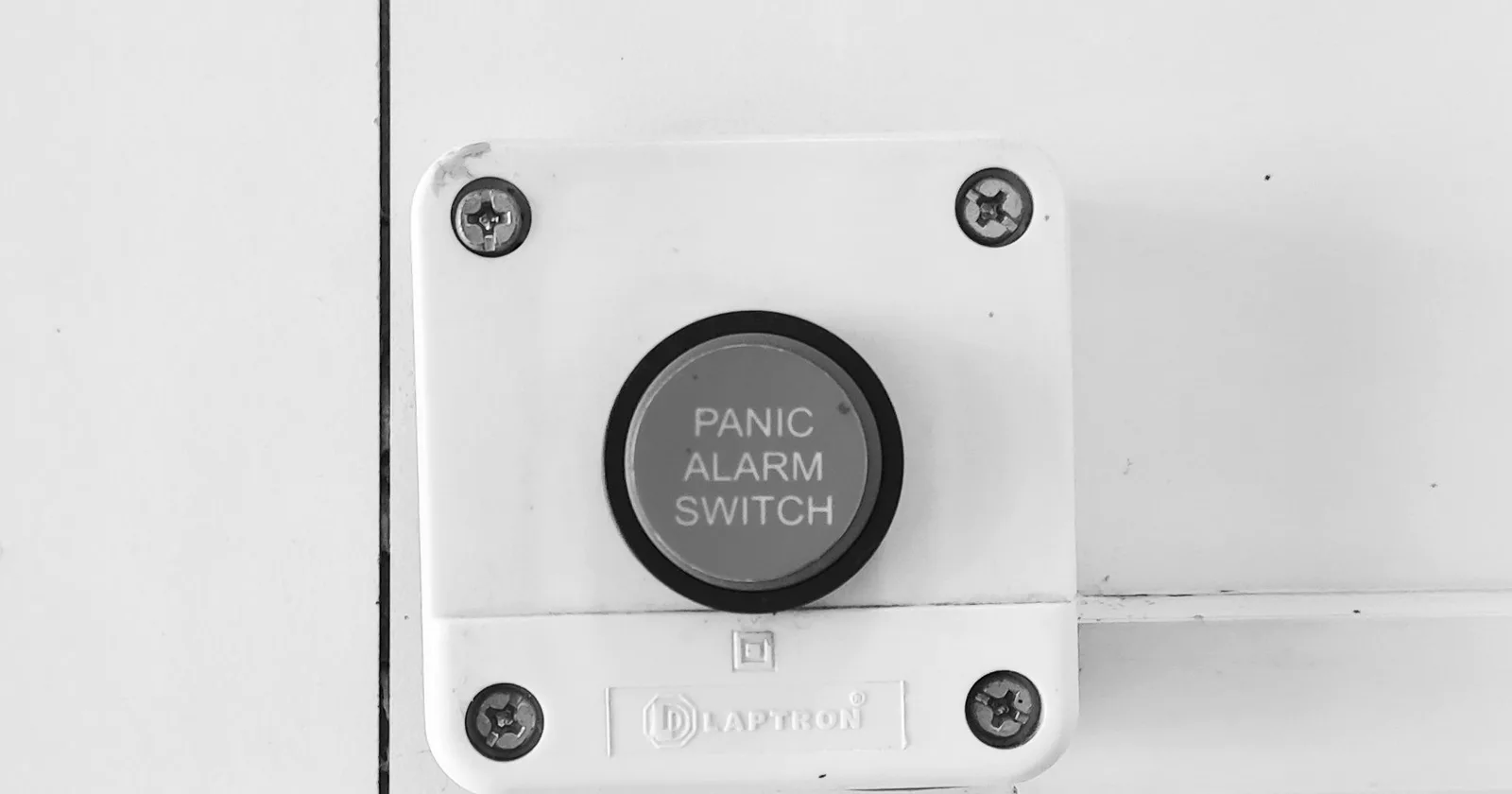
I have never conducted a risk and vulnerability assessment of a CEO without finding a panic button. They're placed under the desk, on top of the desk, at the executive assistant's station, sometimes throughout the C-suite. And almost every time, no one in that office can tell me what actually happens when it's pressed.
You need to know which one is true before you ever need the button. I recommend testing it – with the cooperation of your alarm company or local law enforcement – so everyone in that office knows exactly what to expect. If the signal goes to a dispatch center that calls back to verify before contacting police, that's the reality for a lot of offices, and it's a slow process. Not confidence-inspiring, but it's what you're working with until you change it.
So change it. Work with your alarm company and your local department to shorten that delay – build toward a response where the call gets flagged and prioritized the moment the button is pressed, not after a callback confirms it.
Then train on when to press it. The instinct I see most often is to wait – for more certainty, for the threat to fully develop, for confirmation. Don't. The best time to press the button is as a situation starts to develop, not once it's already at full force. Listen to your intuition and act on partial information. Waiting for certainty is how the delay gets you.
Last, train your people – the executive and everyone around them – on what to do after the button is pressed. How to protect themselves in the minutes before law enforcement arrives. That gap is real, and it's not the time to be figuring it out for the first time.
Don't assume any of this. Test it, train it, and practice it until it's second nature.